
Thinning Shock Absorbers & Unvalidated AI Underwriting: The NY Fed & IMF/ECB Warnings
In November 2026, Federal Reserve Bank of New York researchers warned that while headline bank capital ratios look strong on paper, underlying fire-sale vulnerabilities are rising—echoing mid-November IMF and ECB alerts regarding unvalidated AI credit-scoring models and hidden non-bank leverage.
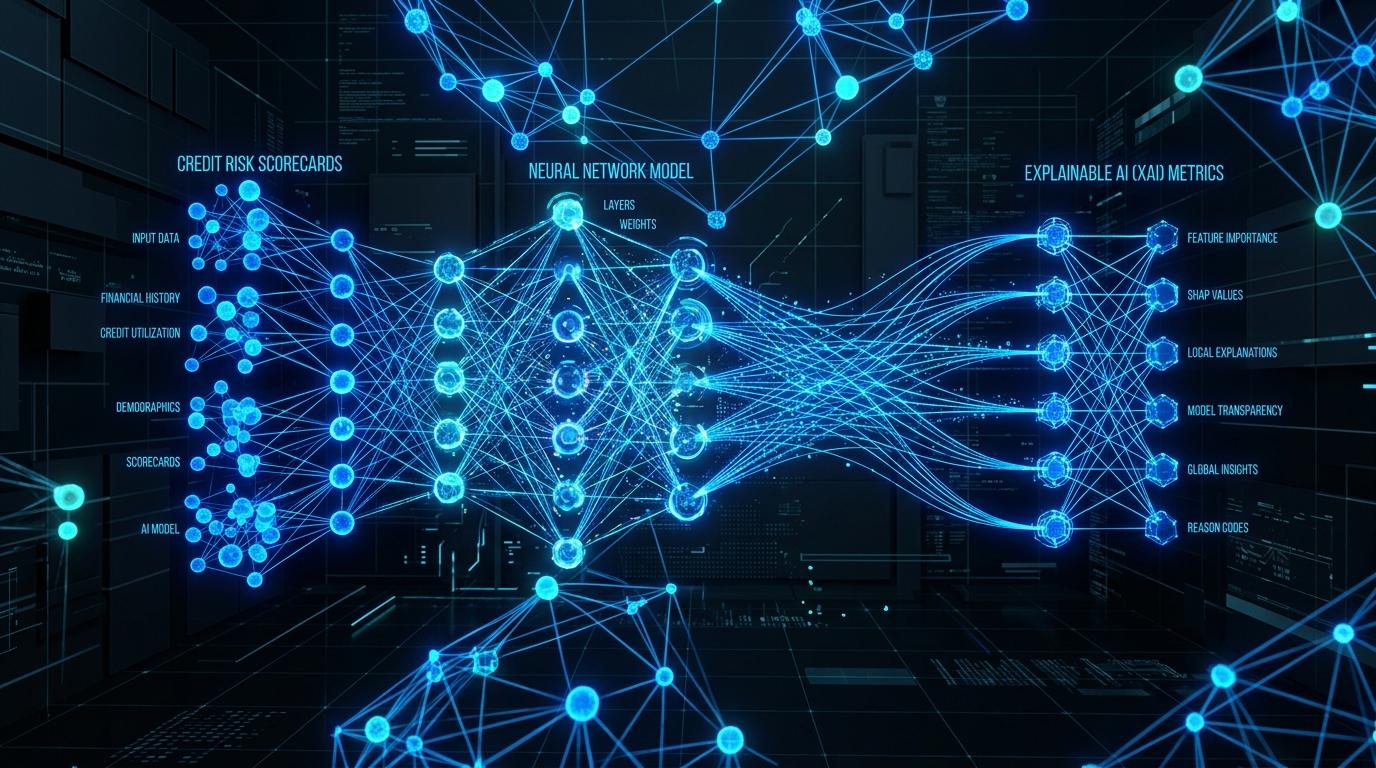
Thinning Shock Absorbers & Unvalidated AI Underwriting: The NY Fed & IMF/ECB Warnings
The Bottom Line Up Front (BLUF):
- The dual November 2026 warnings: In November 2026, researchers at the Federal Reserve Bank of New York reported that despite robust headline regulatory capital ratios, commercial banks’ underlying shock absorbers—including fire-sale vulnerability and reliance on unstable funding—are steadily thinning.
- The AI & NBFI blind spot: Simultaneously, in mid-November 2026, both the International Monetary Fund (IMF) and the European Central Bank (ECB) flagged systemic financial stability risks tied to opaque leverage in non-bank financial intermediaries (NBFIs) and unvalidated AI credit underwriting models.
- The risk governance imperative: Static capital adequacy ratios no longer guarantee institutional survival. Credit committees must implement rigorous Model Risk Management (MRM) over AI credit algorithms and dynamic fire-sale liquidity stress testing.
The Everyday Analogy: A Bridge Passing Visual Inspection While Steel Rebar Rusts Inside
Imagine a highway suspension bridge that passes its annual paint and structural inspection with flying colors. From the road surface, the asphalt is smooth and the cables gleam.
However, hidden deep inside the concrete pilings, salt water is silently corroding the steel support rods, and heavy freight trucks have doubled in weight compared to the bridge's original engineering design. The bridge looks unshakeable on paper—right up until a sudden storm pushes weight distribution past its invisible breaking point.
Why Headline Capital Ratios & Black-Box AI Models Hide Systemic Risk
The convergence of the November 2026 NY Fed study and the ECB/IMF financial stability reports exposes two dangerous blind spots inside modern banking risk architectures:
- The Fire-Sale Liquidity Trap: Banks hold billions in long-duration securities classified as "safe" regulatory capital. However, if rapid depositor outflows force a bank to liquidate those assets quickly during market stress, unrealized mark-to-market losses instantly convert into permanent equity hits.
- Algorithmic Credit Drift (AI Blind Spots): Across commercial and consumer lending, institutions increasingly deploy machine-learning credit-scoring engines trained on benign historical data. When interest rates shift or non-bank private credit borrowers over-leverage, black-box AI models systematically underprice default probability (PD)—delaying vital IFRS 9 Stage 2 ECL provisioning until borrowers are already insolvent.
- Shadow Non-Bank Contagion: When traditional banks lend wholesale lines to private credit funds and non-bank fintech lenders without visibility into the underlying borrower collateral, credit shocks in the shadow banking sector rebound directly onto commercial bank balance sheets.
Risk Governance Comparison: Static Legacy vs. Dynamic Institutional Standard
| Risk Domain | Static Paper Compliance | Dynamic 2026 Institutional Governance |
|---|---|---|
| Capital & Liquidity | Tracking quarterly Tier-1 Capital Ratio only | Continuous modeling of fire-sale haircut losses & unstable deposit flight |
| Credit Underwriting AI | Accepting vendor "black-box" credit scores at face value | Full SR 11-7 / MRM back-testing, drift detection, and explainability audits |
| NBFI Counterparties | Treating private credit funds as low-risk borrowers | Look-through collateral audits mapping hidden systemic leverage |
Executive Credit & Model Governance Roadmap
To address the exact vulnerabilities flagged by central bank supervisors in November 2026, Chief Risk Officers and Audit Committees should enforce three controls:
- Subject AI Credit Models to Adversarial Back-Testing: Never deploy machine-learning underwriting models without quarterly out-of-sample stress testing against severe inflation, currency shock, and interest-rate spike scenarios—with mandatory human override protocols for high-value exposures.
- Run Haircut-Adjusted Fire-Sale Stress Tests: Measure true liquidity resilience by applying aggressive market liquidation discounts (15%–25%) to held-to-maturity bond portfolios under simulated 48-hour wholesale funding runs.
- Enforce "Look-Through" Covenants on Non-Bank Borrowers: Require all non-bank financial intermediaries, fintech lenders, and private credit vehicles accessing bank wholesale lines to report underlying obligor leverage and Stage 2 delinquency migration monthly.